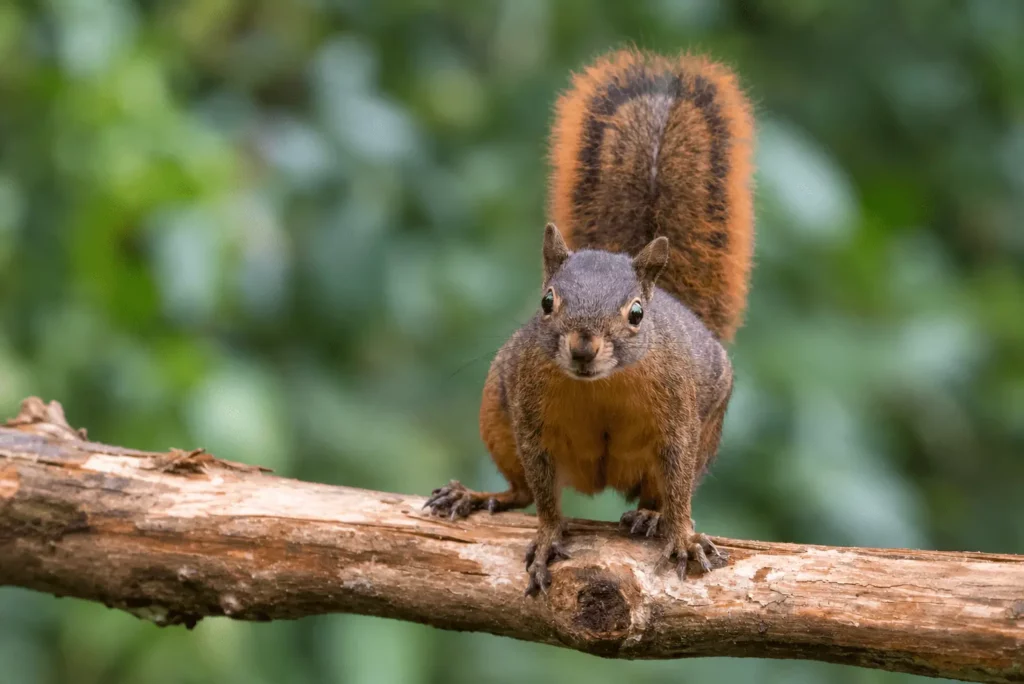
In this edition of Mashpi Science, we share three stories that together confirm something we have long suspected, that this forest is truly one of a kind: scientific data that positions Mashpi-Tayra as one of the most biodiverse and endemic-rich ecosystems in the world; squirrels with an uncommonly distinctive pigmentation detected by our camera traps; and a proposal to UNESCO that recognizes the reserve for its extraordinary geological value.
A Study that Redefines what we Know about Biodiversity in Mashpi-Tayra
Six years of fieldwork, sample analysis and data processing. And a result that changes everything.
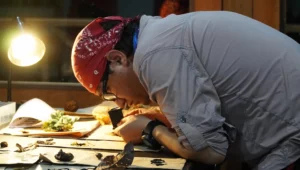
A study recently published in Scientific Data, part of the prestigious Nature family of journals, documented more than 8,000 distinct genetic units of flying arthropods in the Mashpi-Tayra Reserve, of which 7,848 are unique — that is, endemic. In plain terms: nearly eight thousand different types of flying insects found nowhere else in the world.
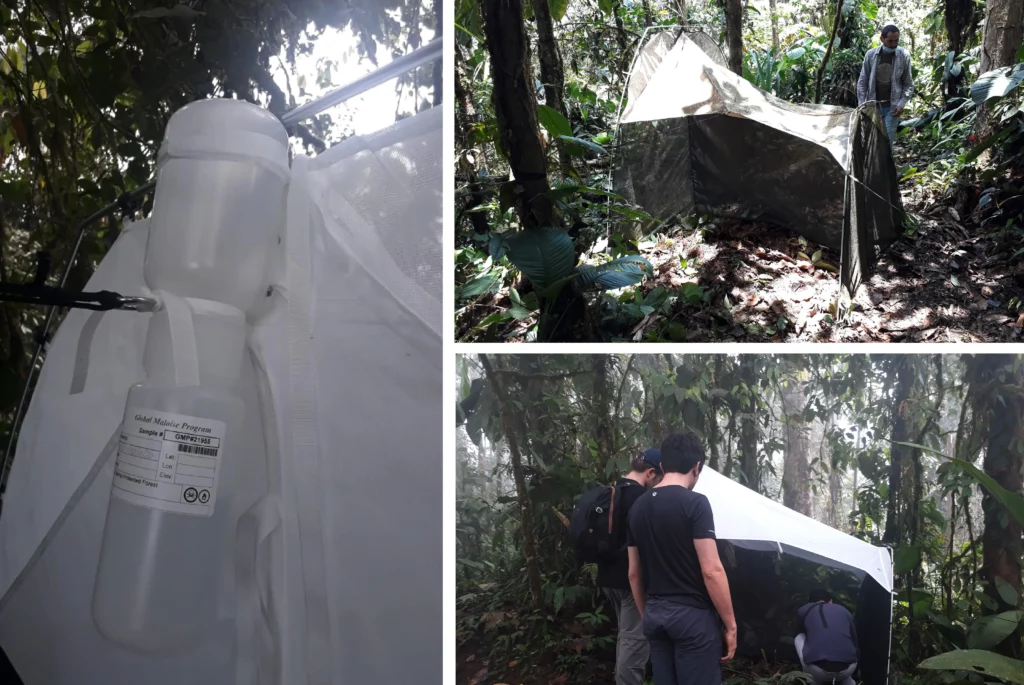
But what exactly is a genetic unit, or BIN (Barcode Index Number)? Think of it as a molecular fingerprint for a species. Without relying on classical taxonomy, genetic analysis can determine whether an organism is new or distinct within a global database. And what makes this study truly extraordinary is that it is part of a standardized monitoring network active in more than 50 countries, making it possible to compare Mashpi directly with other sites around the world.
The comparison is striking. Guanacaste in Costa Rica and Barro Colorado in Panama — two of the most intensively studied tropical ecosystems on the planet — have been monitored for far longer than Mashpi-Tayra. And yet Mashpi shows greater and growing species richness and higher endemism.
“These results are incredible and commit us to continuing to care for this magical forest. They drive us to study this region further and to maintain our collaborative model for understanding and protecting life.” — Roque Sevilla, founder of Mashpi Lodge and president of Fundación Futuro
For more details on this study, visit our blog!
White-patched Squirrels: When the Unexpected Opens New Questions
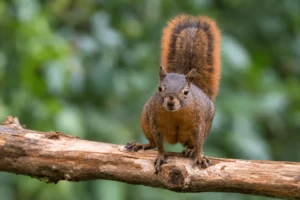
The red-tailed squirrel (Syntheosciurus granatensis) is a familiar resident of forests like Mashpi Lodge’s. Small, agile, with a reddish coat. But some of them have something that catches the eye: white patches scattered across their bodies, like small flecks of paint.
This is not merely an aesthetic curiosity. It is piebaldism — a condition in which parts of the body partially lose melanin, resulting in depigmented areas. A new study published in Ecology and Evolution, led by biologist Elías Viteri-Basso of Quito’s San Francisco University, documented 137 records of these squirrels using camera traps, citizen science observations on iNaturalist, and data from other research projects — including records from the Mashpi-Tayra Reserve.
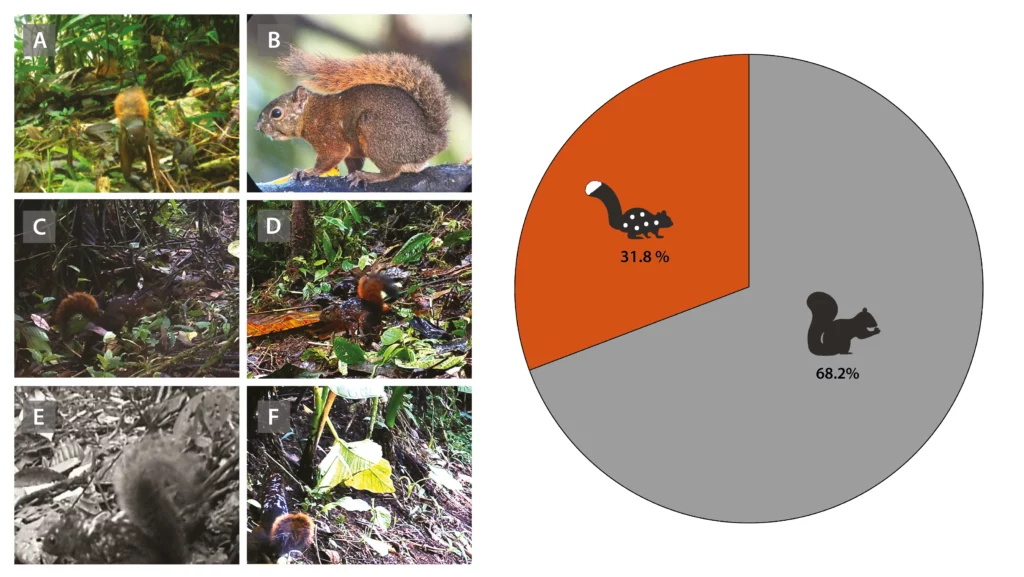
The most striking finding was the frequency: piebaldism appeared in 31.8% of detections — an unusually high proportion for a condition generally considered rare, and one that raises a compelling question: could this be a population- and regional-scale pattern, rather than a handful of isolated cases?
The causes remain unclear. Genetic, environmental and ecological factors may all be involved. What is clear is that discovering an unexpected pattern is often the first step toward formulating new scientific questions. And in Mashpi, those questions never stop emerging.
Mashpi as a Geosite of Global Importance
At first glance, Mashpi is a cloud forest teeming with life: waterfalls, epiphytes, frogs, birds, insects. But beneath all of that lies something equally fascinating — a geological history millions of years in the making that gives this place a dimension unlike any other.
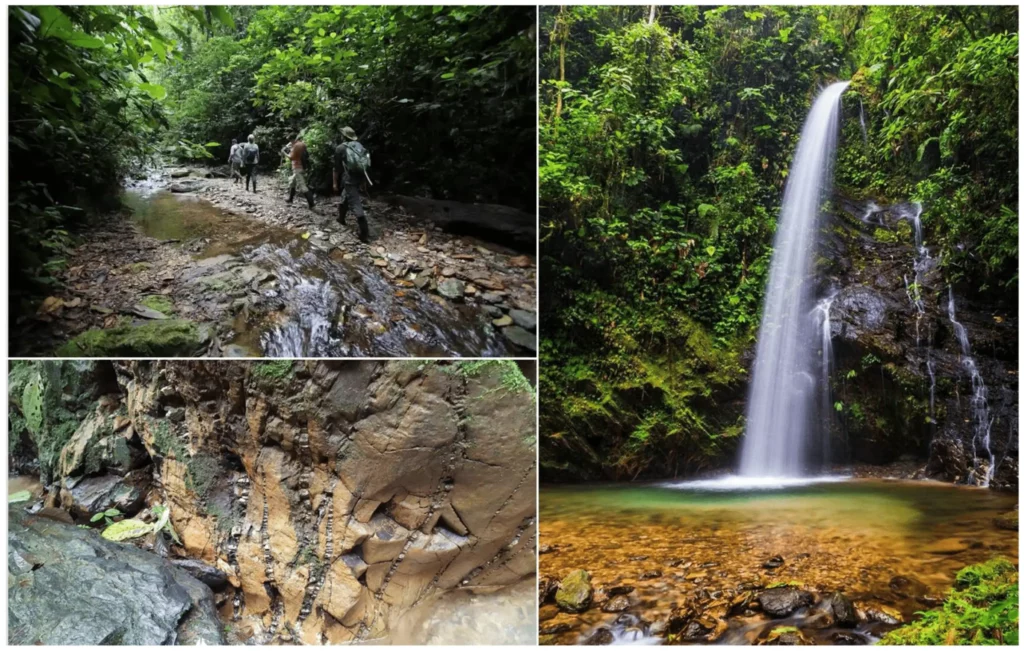
The terrain of the Mashpi-Tayra Reserve is composed of ancient rocks — shales, quartzites, schists, and conglomerates belonging to the Macuchi Formation, dating from the Cretaceous period (between 145 and 66 million years ago). These are the remnants of a marine and volcanic past that was slowly pushed upward by tectonic forces. Millions of years of rain and erosion did the rest, shaping the slopes, ravines, and canyons that today shelter one of the richest concentrations of biodiversity in the world.
A study led by geologist Theofilos Toulkeridis seeks to have Mashpi — alongside other sites within the Metropolitan District of Quito — recognized as a geosite of global importance within the UNESCO Global Geoparks network. This is not merely an honorary title: it carries real commitments to conservation, research and responsible tourism, and places Mashpi Lodge and the Mashpi-Tayra Reserve on the international geological map.
During your visit to Mashpi Lodge, you can see these rocks for yourself while on a river hike: exposed stratifications in striking red and yellow bands that look as though they were painted by hand onto living rock. A window into the deep past of the Earth, open to any curious explorer.
We will be following the progress of this nomination closely.
Every study, every observation, every question that arises here reinforces something we know with certainty: Mashpi-Tayra is a place the world needs to know — and to protect.
Follow #MashpiScience to stay up to date with all the discoveries and stories from our reserve.